
This story was originally published by the Concord Bridge. You can read the story here.
The kids are concerned — but not necessarily about Concord’s municipal budget or what’s next for the decommissioned prison. They’re more worried about issues like climate change and wealth disparities.
The younger set doesn’t often get involved in local politics or Annual Town Meeting. Some local leaders would like to see that change, but the answer may not be around the corner.
Concord and several other municipalities petitioned the state legislature to allow them to decide whether 16- and 17-year-olds could vote on certain local issues.
That measure failed last year.
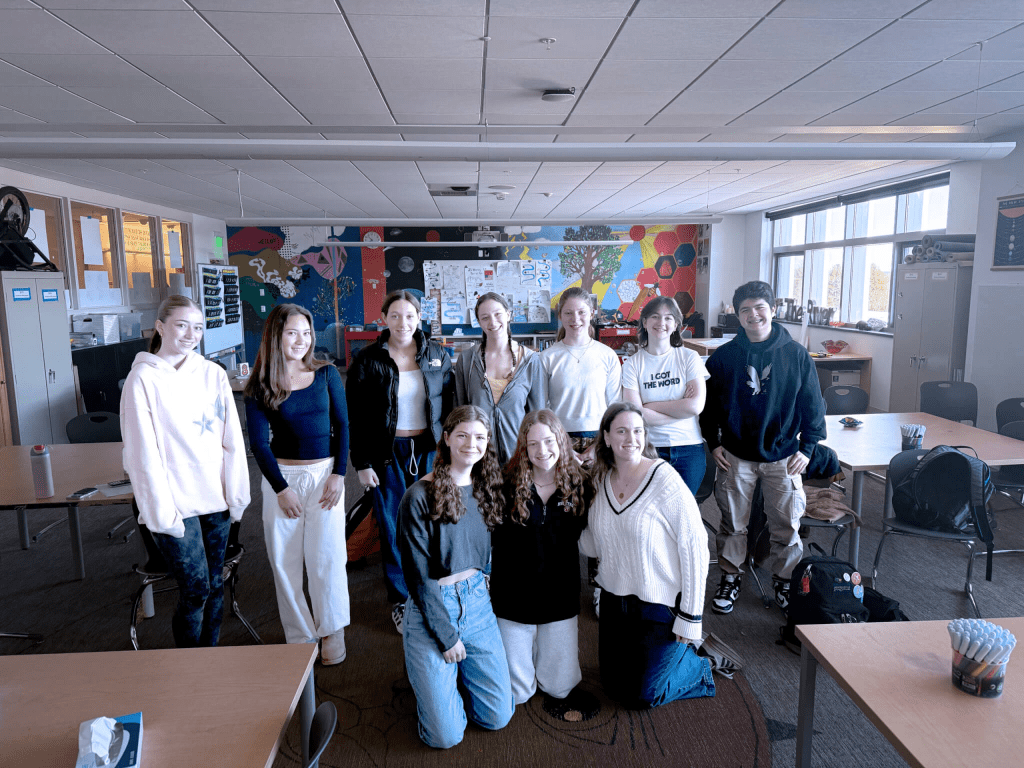
And Concord-Carlisle High School students say they’re more focused on national and global issues — and there’s little time in their packed schedules to get involved in those local politics.
“I feel like it’s less about making a change rather than just, like, being like a citizen,” CCHS student Sadie Kokoszka told The Concord Bridge.
She participates in four politically focused clubs at CCHS: Junior State of America, History Reading Group, Rho Kappa, and Model UN. During club meetings, students discuss sweeping, perhaps existential issues that may range from indigenous land rights to climate change.
Kokoszka, who has lived in both Concord and Carlisle, said that compared to topics such as local recycling policies, national issues can just feel more pressing.

Reaching out?
Julie Leary, 16, said Town Meeting can seem daunting to students like her.
“It feels like they don’t really want the kids there,” Leary said. “They’re like, ‘You can go if you want,’ but like, they’re not going to make an effort [to] reach out and bring us in.”
Leary belongs to Junior State of America, History Reading Group, Kappa and Moot Court. Despite all that, she can feel intimidated by local politics.
“I just… don’t really know how to get into the town politics,” Leary said. “I feel like it’s more geared towards adults — especially in Concord.”
Overall, Americans’ views on politics are bleak, with nearly 65% of Americans saying they feel exhausted when thinking about politics according to a 2023 Pew Research Center study. Only 10% said they feel hopeful.
CCHS student Elise McMurrow belongs to Rho Kappa, Moot Court, History Reading Group, and Innocence Club, which raises money for people who are wrongfully incarcerated.
She’d like to work in the community at some point — yet hyperlocal matters pale compared to national and world issues.
“When you look at all the issues that are facing our country and the world right now, it just seems a little bit less, you know, pressing,” McMurrow said. “I don’t want to speak for everyone, but it feels almost like it isn’t necessary for us to get involved.”

Votes that matter
As Concord ponders ways to make its brand of self-governance more accessible, Town Moderator Carmin Reiss said there’s been a strong desire to find ways to include younger people in the Town Meeting process.
“Their vote would make a difference,” she said.
The Massachusetts Moderators Association provides educational materials so schools can conduct mock Town Meetings and follow articles through local government. However, there wasn’t much interest in adding more to the students’ curriculum, Reiss said.
“When I was first elected, I looked up one of the history teachers at the … high school and went and met with him and asked, ‘Well, can we do something here?’” Reiss said. “Everything was so packed already that there wasn’t a lot of interest in adding more.”
While Reiss allows that not everything discussed at Town Meeting is “scintillating,” she also believes it’s the nation’s purest form of direct democracy.
“There is a lot of self determination that we have an ability to make happen through our Town Meeting, and you often think it’s people at their best, really thinking about things and offering their points of view, and they don’t always agree,” Reiss said.
“And a result comes out of it, and it’s a peaceful result, which is a wonderful thing about democracy when it works.”
This story is part of a partnership between The Concord Bridge and the Boston University Department of Journalism.
 Gabriel Martins
Leave a comment